


Bubble Freedom
4.49.21K Reviews
App Specs
- Version
- 6.40
- Updated On
- License
- Free
- Downloads
- 10,000,000+
- Developer
- Bubble Shooter Artworks
- Categories
- Adventure
- Platform
- Android
Screenshots
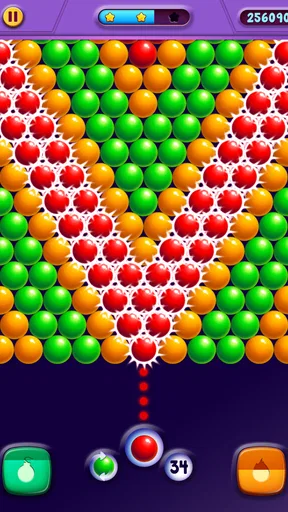
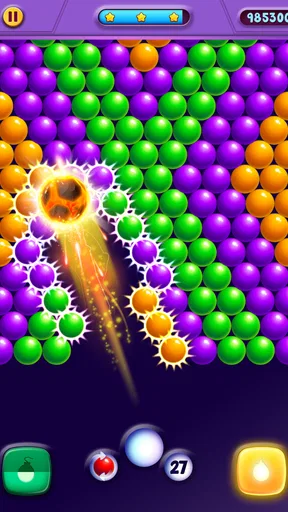
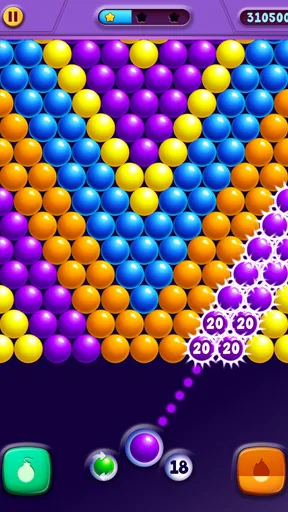
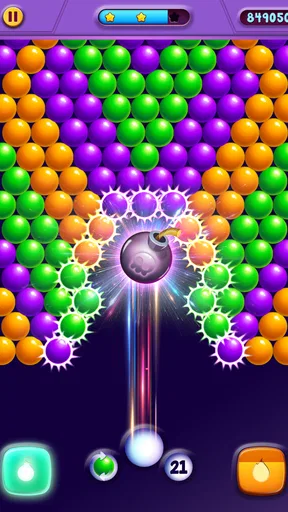

 Analysis by AppCompare
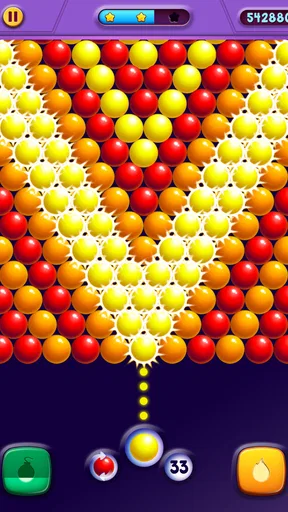
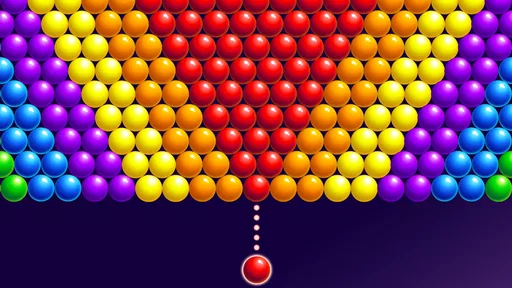
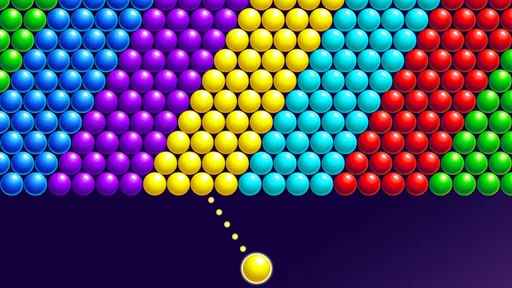
Bubble Freedom is the kind of adventure game I can open for a few minutes without needing to prepare myself for a complicated system. Its bright bubble boards, simple matching rule, and short level structure make a friendly first impression, but the presentation works best when I pay attention to how the visual style and pacing support the basic puzzle. I match groups of three or more colorful bubbles, clear the board, and use boosters or power-ups when the layout starts pushing back.
After spending time with it, I see the game as a relaxed, accessible option rather than a deep puzzle adventure. That is not a criticism by itself. The appeal is its low barrier to entry: I can understand the objective almost immediately, yet still have reasons to think about order, positioning, and when to spend a useful tool. Bubble Freedom is free to play, suitable for Everyone, and comes from Bubble Shooter Artworks. Its average rating of 4.4 from around 120 thousand ratings and more than 10 million installs suggest that this straightforward format has found a large audience.
A bright adventure built around small decisions
I find Bubble Freedom most appealing when I treat each board as a small planning exercise rather than a race to make the first available match. In this section, I’ll look at how its bright presentation keeps those choices approachable, while a brief pause to scan the layout can reveal opportunities that are easy to miss at first glance.
The first few minutes tell me exactly what kind of game this is
The opening experience is deliberately readable. The bubbles are the focus, the colors are easy to distinguish, and the goal does not require a long tutorial before I can begin. That clarity matters on a phone, especially when I am playing during a short break rather than settling in for a long session. I do not have to remember a complicated control scheme or learn a large set of menus before the game becomes enjoyable.
The game’s adventure identity comes less from a dramatic story and more from progression through successive challenges. Each board gives me a compact problem to solve, and the sense of moving forward comes from clearing one level after another. I find that approach useful when I want a game with a little more structure than an endless arcade mode, but less commitment than a large role-playing adventure.
My first impression is strongest when I treat each level as a small visual puzzle instead of rushing to pop whatever is immediately available. The obvious match is not always the best match. A move near the bottom or beside a larger connected group can open more of the board, while a tempting match in an isolated area may only provide a small gain. That simple difference gives the game more thoughtfulness than its cheerful appearance initially suggests.
Who will enjoy the gentle pace, and who may not
I would recommend Bubble Freedom to someone who likes color-matching games, short mobile sessions, and goals that can be understood without reading a manual. It also suits players who prefer a light mood over a tense competitive atmosphere. The Everyone age rating reflects how approachable the presentation is, and I can imagine it working well for families who want an uncomplicated puzzle game to share or play separately.
Worth Reading Before You Choose

EA SPORTS FC Mobile 26 Is a Bigger Football Game, but It Takes Time

Flipboard Shows What News Apps Must Do Beyond the Feed

Switching to Android Auto Means Rethinking Your Driving Routine

Google Calendar Makes a Crowded Week Easier to Manage

Ludo King Makes the Most of the Minutes Between Plans

Baby Panda World Brings Quick Play to Modern Phones, but Its Game Library Feels Busy
It is less suitable for someone looking for a story-heavy adventure, precise platforming, or a puzzle system that constantly introduces new rules. The core action remains recognizable throughout. If I need a game with character development, exploration, or a strong narrative reason to continue, this will feel limited. Its charm depends on enjoying gradual level progression and the satisfaction of making a clean sequence of matches.
There is also a practical difference between a game I play casually and one I expect to master. Bubble Freedom is easy to start, but that does not mean every board should be played thoughtlessly. The challenge comes from arranging the available bubbles and using the right opportunity, not from learning a large collection of mechanics. Players who enjoy that kind of modest planning will probably get more from it than players who want constant novelty.
How the visual language supports the puzzle
The art direction is built around immediate recognition. Colorful bubbles are not merely decoration; they are the information I need to process before every shot or match. Clear shapes and strong color separation help me scan the board quickly, which is especially important on a smaller phone screen. The result is a playful look that keeps the puzzle legible instead of burying it beneath visual effects.
I like that the setting does not compete too aggressively with the board. The adventure framing gives the progression a sense of place, but the bubbles remain the visual priority. This is a sensible choice for a game where one misplaced glance can change the best move. A more elaborate background might look impressive in screenshots while making the actual decisions harder to read.
The bright presentation also affects how I perceive difficulty. A board can demand careful planning without feeling gloomy or intimidating because the colors keep the mood buoyant. That contrast is one of the game’s more effective choices: the player is asked to think, but the game does not present thinking as a serious chore. I can approach a difficult level with curiosity rather than the feeling that I am entering a harsh test.
One useful habit is to look past the most noticeable bubble group and inspect what sits behind or below it. The art makes the board inviting to scan, but the best decision often depends on the less obvious arrangement. I find it helpful to pause briefly before acting, identify which match will expose the most useful area, and only then commit. That small pause improves the game without requiring any advanced knowledge.
Why the sound and rhythm matter more than expected
The game’s sound and visual feedback help define its rhythm. Matching bubbles creates a repeated cycle of anticipation, action, and release: I look for a connection, make the move, and watch the board respond. That rhythm is a major part of the appeal. Even when the underlying rule is simple, the sequence gives each successful move a satisfying sense of completion.
I do not experience Bubble Freedom as a fast reflex game. Its pacing leaves room for observation, and that makes the sound feel like punctuation rather than pressure. The board can become exciting when a move triggers a larger clear or opens a useful route, but the overall mood remains controlled. This makes it comfortable for casual play, including moments when I want something engaging without the intensity of a timed action game.
The pacing also encourages me to separate two kinds of progress. There is the immediate pleasure of clearing bubbles, and there is the slower satisfaction of setting up a better position. If I only chase the first kind, I can waste opportunities. If I focus exclusively on planning, I lose the light, playful character that makes the game pleasant. The best sessions balance both: I make a sensible plan, then enjoy the visual and audio response when it works.
For everyday use, I can see the game fitting naturally into a commute, a waiting room, or a quiet break between tasks. A short session does not demand the emotional investment of a long adventure game. At the same time, I would not choose it when I need complete silence or when repeated pop effects might distract people nearby. The game’s feedback is part of its identity, so the experience is better when I can comfortably engage with that rhythm.
Matching mechanics with a little more planning
The central rule is easy to explain: connect and pop three or more bubbles of the same color. What gives the mechanic staying power is the way each move changes the remaining board. A match can remove an obstacle, expose a new area, or create a better angle for the next action. I get the most enjoyment when I stop treating individual matches as separate events and start viewing the board as a chain of possible consequences.
My most useful strategy is to delay a convenient match when it can serve as part of a larger setup. This does not mean waiting forever. If the board is becoming crowded or a move risks closing off a useful route, taking the immediate clear may be wiser. The trade-off is between securing progress now and preserving flexibility for later. That decision is simple enough for new players to understand, yet meaningful enough to keep experienced casual players involved.
Boosters and power-ups add another layer to that choice. I prefer to think of them as solutions for awkward board states rather than rewards to spend automatically. Using one as soon as it appears may make a level feel easier in the moment, but saving it for a layout with several blocked possibilities can have a larger effect. This is one of the game’s less obvious lessons: a power-up is valuable not only because of what it clears, but because of the options it restores.
That approach also helps explain why I would not recommend spending every helpful item simply to move quickly. A player who is stuck should first inspect whether a different match order can create the same opening without assistance. On the other hand, refusing to use a booster at all can turn a relaxing game into unnecessary repetition. I aim for a middle ground: experiment once or twice, then use the tool when the board is genuinely constricted.
How it compares with other bubble and match games
Compared with a pure endless bubble shooter, Bubble Freedom gives me a stronger sense of destination because the levels create a sequence of goals. I am not only trying to beat my previous score or continue until I fail; I am working through a collection of compact challenges. That makes it a better fit for someone who likes visible progress and a gentle adventure frame.
Compared with a match-three game built around swapping tiles, the interaction feels more focused on color grouping and clearing connected bubbles. The board’s visual structure becomes important in a different way. I am not simply searching for any available three-piece combination; I am considering how a match affects the area around it and how the next opportunity might appear.
There is a trade-off in that specialization. A broader match-three game may offer more varied objectives, board shapes, or strategic systems, while Bubble Freedom keeps returning to its bubble-centered identity. I prefer Bubble Freedom when I want a consistent, readable activity. I would choose a more elaborate alternative when I am specifically looking for deeper progression, more varied rules, or a stronger narrative wrapper.
The game is free, which makes it easy to try without committing money at the start. Optional in-app purchases range from $0.99 to $99.99 per item, so I would advise setting a personal spending boundary before playing for a long time. The free entry is appealing, but players who are sensitive to purchase prompts or who dislike the possibility of paying for convenience should approach the progression with that in mind.
Version, access, and the practical side of playing
Bubble Freedom is currently at version 6.40 and requires Android 5.1 or later. That makes it accessible on a broad range of Android devices, including phones that are not running the newest operating system. I would still judge the experience by the condition of the individual device, because screen size, responsiveness, and available storage can affect how comfortable a colorful puzzle board feels in practice.
The game was released on December 7, 2017, and its continued presence alongside a large install base gives it the feel of an established casual title rather than a brand-new experiment. I find that reassuring when I want a familiar type of game with a proven audience, although longevity does not automatically make the mechanics suitable for everyone. The important question is whether the steady bubble-popping loop matches the kind of sessions I actually want.
One point I would consider before recommending it to a child is the difference between content suitability and spending habits. The Everyone rating makes the game approachable from a content perspective, but the available purchases mean an adult may still want to supervise account settings or agree on rules beforehand. That is a practical consideration for family devices, not a reason to dismiss the game’s otherwise gentle presentation.
Small tactics that make difficult boards less frustrating
When I am stuck, I first inspect the lower part of the arrangement and ask which match will affect the largest connected section. Clearing a visually obvious group at the top can feel productive while leaving the real obstruction untouched. A move that opens space or changes the shape of the board is often more useful than one that simply removes the most visible bubbles.
I also try to avoid spending a power-up while the board still offers several ordinary routes. The exception is when a normal move would permanently reduce my options or leave an awkward color arrangement with no promising continuation. In that situation, the power-up is doing more than saving a move; it is preventing the level from becoming a sequence of low-value actions.
Finally, I treat failed attempts as information. If the same kind of board keeps causing trouble, I look at the order of my first few matches rather than assuming the level is purely unlucky. Often the early move determines whether the later board stays open. This mindset keeps the game from becoming a frustrating cycle of tapping and restarting, and it turns the simple rules into a small exercise in planning.
Where the atmosphere succeeds, and where it reaches its limit
The strongest part of Bubble Freedom is the way its art, feedback, and pacing agree with one another. The colorful bubbles make the objective readable, the cheerful setting keeps the mood light, and the steady rhythm gives ordinary matches a pleasant sense of payoff. None of these elements tries to overpower the others. The atmosphere exists to make the puzzle inviting, while the puzzle gives the atmosphere a reason to exist.
Its limitation is equally clear: the mood cannot replace mechanical variety forever. If I want a game that continually changes its identity, Bubble Freedom may eventually feel too familiar. The boosters and level progression add useful texture, but the central activity remains the same. That consistency is ideal for a player who wants comfort and accessibility, yet less appealing to someone who needs constant surprise.
I would also skip it if my main priority is competition, narrative depth, or a demanding skill curve. A dedicated competitive bubble game may offer a stronger sense of pressure, while a story-led adventure will provide more character and world-building. Bubble Freedom occupies a calmer middle ground, and it works best when I judge it by that purpose rather than expecting it to become something more ambitious.
For me, the final verdict is positive with a clear qualification: Bubble Freedom is at its best as a colorful, low-pressure puzzle adventure for short, repeatable sessions. I like how the presentation gives each board a coherent mood without hiding the decisions underneath. I can recommend it to friends who enjoy matching games and want a welcoming way to fill spare minutes, especially if they appreciate planning around boosters instead of using them blindly.
I would start with the free version, play several levels without rushing, and decide whether the repeating bubble loop holds my attention before considering any purchase. If the simple rhythm feels satisfying, the game has enough small tactical choices to remain enjoyable. If I am already wishing for a deeper story or more dramatic mechanical changes, that reaction is useful too: it means a different adventure or puzzle game will probably be a better match.
Pros
- Simple bubble-shooting gameplay that is easy to learn.
- Short levels make it suitable for quick gaming sessions.
- Colorful visuals are appealing to casual players.
- Increasing difficulty provides a steady challenge.
- Offline play is convenient when no connection is available.
Cons
- Some levels may feel repetitive after extended play.
- Difficulty can increase sharply in later stages.
- Limited gameplay variety may reduce long-term interest.
- Ads may interrupt the experience between levels.
- Progression can feel slow without optional purchases.
FAQs for Bubble Freedom
What is Bubble Freedom and how does the game work?
Bubble Freedom is a casual bubble-shooting puzzle game in which you aim and match bubbles of the same color to clear them from the board. The game is easy to understand, making it suitable for short sessions, but later levels usually require more careful planning, accurate shots, and thoughtful use of the available bubbles and boosters.
Is Bubble Freedom free to download and play?
Bubble Freedom can generally be downloaded and played without an upfront purchase, although the exact availability and pricing may vary between Android and iOS. Like many free-to-play puzzle games, it may include optional in-app purchases for extra lives, boosters, coins, or other conveniences. Check the store listing and purchase settings before downloading.
Can Bubble Freedom be played offline?
Many of the basic bubble-shooting levels can often be played without a continuous internet connection, which makes Bubble Freedom convenient for travel or quick offline sessions. However, certain features may require connectivity, including advertisements, online events, cloud synchronization, updates, or in-app purchases. Offline support can also vary between versions and devices.
Does Bubble Freedom contain advertisements or in-app purchases?
Bubble Freedom may display advertisements, particularly between levels or when you choose to receive optional rewards. It may also offer in-app purchases for additional lives, coins, boosters, or other game items. These purchases are not normally required to understand the core gameplay, but progress can feel slower if you avoid optional rewards. Parents should review device purchase controls.
Is Bubble Freedom suitable for children and beginners?
Bubble Freedom is generally approachable for beginners because its controls and matching mechanics are simple to learn. The colorful presentation and short levels can also appeal to younger players. Nevertheless, adults should check the current store rating, advertising content, privacy information, and purchase options, since these details may change with updates and can differ by region or platform.


